
Bhai Dooj Story for Kids: When Yama Visited His Sister Yamuna
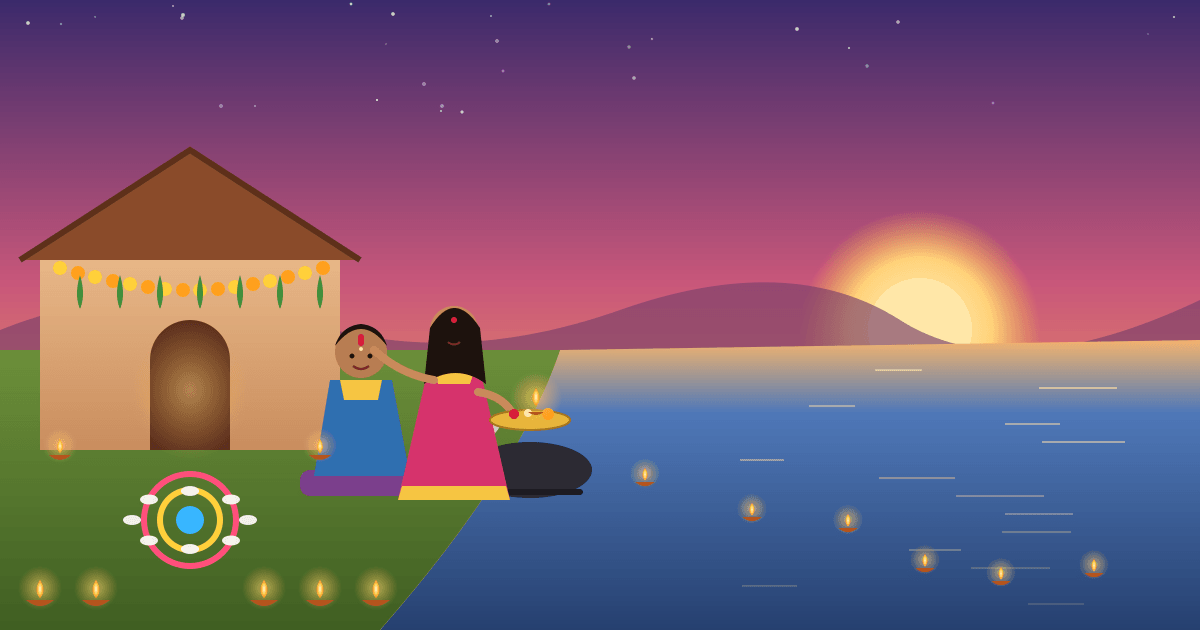
On Bhai Dooj morning, sisters across India and Nepal get a small plate ready: a lamp, a little red kumkum, a few grains of rice, a sweet. Brothers arrive, sit down, and get a tilak on the forehead. Children usually ask the obvious question: why this day, and why the tilak? The answer is the Bhai Dooj story: Yamuna, the river goddess, waited a long time for her busy brother Yama to visit, and when he finally came on this day she welcomed him with a lamp, a tilak and a feast. Yama was so touched that he blessed every brother who visits his sister on Bhai Dooj.
Below is a gentle retelling for children aged about 4 to 10. It takes around four minutes to read aloud. After it you will find the second Bhai Dooj story, about Krishna and his sister Subhadra, where the stories come from, what they mean, the 2026 date and questions to ask at the end. Bhai Dooj is the fifth and last day of Diwali, so it closes our festival series that began with the Dhanteras story and continued with the Narakasura story, the Diwali story of Rama’s return and the Govardhan story.
The Sister Who Kept a Lamp Waiting: a Bhai Dooj story for kids
Long, long ago, the Sun had two children who were born on the same day. The boy was called Yama and the girl was called Yamuna. They were twins, and when they were small they did everything together. They raced across the sky, they splashed in the clouds, and when one of them laughed, the other one laughed too.
But children grow up, and Yama and Yamuna grew up and went different ways.
Yamuna became a river. She flowed down from the mountains, cool and blue, past fields and forests and villages. Children played on her banks, cows drank from her water and boats floated along her back. She liked being a river. Still, every evening, when the water turned gold in the sunset, she thought about her brother.
Yama was given a very serious job. He became the king who looks after the end of every life and guides each soul safely onwards. It was an important job, and it never stopped. Day and night Yama rode his big black buffalo from one end of the world to the other, with his helper Chitragupta beside him, writing everything down in a giant book.
One day Yamuna sent her brother a message on the wind. “Dear brother, please come and visit me. I will cook your favourite food.”
Yama read it and smiled. “Soon,” he said. “When I have a free day.” But there was no free day.
Yamuna sent another message, carried by a fish. Then one carried by a heron. Then one painted on a leaf and floated down the river. Each time Yama read it, felt warm inside and said, “Soon, little sister. Soon.” And each time, his work kept him away.
Months went by. A whole year went by. Yamuna did not get angry. Every evening she lit one small clay lamp on her doorstep, just in case tonight was the night.
Then, a few days after the darkest new-moon night of the year, Yama stopped his buffalo on a hill and looked at his book. “Chitragupta,” he said, “how long has it been since I saw my sister?”
Chitragupta turned the pages, and turned them, and turned them. “A very long time, Your Majesty.”
Yama closed the book. “Then today,” he said, “the world can wait.”
It was the second day of the new moon’s bright half. When Yamuna looked up from the river and saw the big black buffalo coming down the path, she dropped her water pot and ran.
“You came!” she cried.
“I came,” said Yama, and for a moment the two grown-up twins hugged like the children they used to be.
Yamuna had been ready for a year. She sat her brother on a soft mat outside her cottage, which she had decorated with marigold flowers and mango leaves. She brought out a plate with a little lamp, red kumkum powder and grains of rice. She circled the lamp slowly in front of his face, praying for him. Then she pressed a red tilak on his forehead and sprinkled a few grains of rice on top.
Then came the food. Hot puris and dal, sweet rice, his favourite curry, crunchy snacks, and sweets she had made with her own hands. Yama ate until he could eat no more. They talked about the old days in the sky, they laughed at the same silly things, and Yama forgot all about his heavy book.
When it was time to go, Yama stood up and said, “Sister, you have made me happier than I have been in years. Ask me for any gift, and I will give it to you.”
Yamuna thought for a moment. She did not ask for gold or jewels.
“Brother,” she said, “come and see me on this day every year. And promise me one more thing. On this day, any brother who visits his sister and lets her put a tilak on his forehead should be blessed with a long, happy life. Let no brother be afraid of you on this day.”
Yama smiled the biggest smile anyone had ever seen on his serious face. “It is a wonderful wish,” he said. “And it is granted.”
Then he climbed onto his buffalo and rode away, turning back to wave until the cottage was a tiny speck by the river.
And that is why, on Bhai Dooj, brothers visit their sisters, sisters light a lamp and put a tilak on their brothers’ foreheads, everyone eats far too much, and the day is still called Yama Dwitiya, Yama’s second day.
The second Bhai Dooj story: Krishna visits Subhadra
Many families tell another story on this day, and it follows straight on from the Narakasura tale. After Krishna defeated the demon Narakasura and set his prisoners free, he did not go straight home. He went to see his little sister, Subhadra.
Subhadra had heard about the battle and had been worried. When she saw her brother at the door, safe and smiling, she was so relieved that she welcomed him like a hero. She scattered flowers, offered him sweets, did his aarti with a lamp and put a tilak on his forehead to protect him. Some people say this happy homecoming is where the Bhai Dooj tilak began. It is a nice one to tell straight after the Narakasura story, so the battle ends with a family hug.
Where these stories come from
Yama and his twin sister Yami are very old figures. In early texts such as the Rig Veda they are the twin children of the Sun, and later Yami came to be known as Yamuna, the sacred river that flows past Mathura and Agra. The story of Yamuna feeding her brother is a folk and Purana-based tradition, and it gives the festival its other name, Yama Dwitiya, the second lunar day of the bright fortnight of Kartika, when Yama is said to have visited.
The festival has many names. It is Bhai Dooj or Bhaiya Dooj in North India, Bhau Beej in Maharashtra, Goa and Gujarat, Bhai Phonta in Bengal, and Bhai Tika in Nepal, where it is the fifth day of Tihar and sisters give their brothers a tall tilak of seven colours. Like all family festivals, the details change from home to home, but the heart stays the same: a sister’s prayer and a brother’s promise.
What the story means for children
- Busy people still need family. Yama has the most serious job in the world, and he still needs a day with his sister. It is a gentle way to talk about grown-ups who work hard and miss their families.
- Patience and kindness win. Yamuna keeps inviting her brother without getting angry, and keeps a lamp lit for him. When he finally comes, she is ready.
- The best gift is not a thing. Offered any gift at all, Yamuna asks for a yearly visit and a blessing for every brother. Children can think about what they would wish for someone they love.
- Brothers and sisters look after each other. The sister prays, the brother protects, and both share. In many homes today, girls and boys of every age give each other the tilak, and cousins join in too.
- No one is left out. In parts of Haryana and Maharashtra, a girl with no brother does the aarti for the Moon instead, which is one reason the Moon is lovingly called Chanda Mama, Uncle Moon.
When is Bhai Dooj in 2026?
Bhai Dooj falls on Dwitiya, the second day of the bright half of the moon, two days after the Diwali new moon. Drik Panchang lists Bhai Dooj, Yama Dwitiya and Chitragupta Puja on Wednesday 11 November 2026 (New Delhi time). It follows Lakshmi Puja on Sunday 8 November and Govardhan Puja on Tuesday 10 November. If you live outside India, check your local panchang or temple calendar, because the tithi can shift the date by a day.
On the day, sisters usually prepare a thali with a diya, kumkum or roli, rice grains and sweets. They do the brother’s aarti, apply the tilak, feed him a sweet and share a meal, and brothers give a gift in return. In Bengal the sweet is often a special sandesh; in Maharashtra families make basundi puri.
How to tell this story to young children
- Make a mini thali. Before you start, let your child arrange a plate with a tea light, a little kumkum and a sweet. Use it when Yamuna welcomes Yama, and let your child do the pretend aarti for a sibling, cousin or teddy.
- Repeat the messages. The wind, the fish, the heron, the leaf. Let your child suggest the next messenger. This kind of repetition is exactly why kids ask for the same story again and again.
- Keep Yama friendly. For under-sixes, just call him a king with a very busy job who rides a big buffalo. You can explain his real role when your child is older and asks.
- Pause before the wish. Stop when Yama says “Ask me for any gift” and ask your child what Yamuna should choose. Their answers are often lovely.
- End with the wave. Slow down at the end, with Yama waving until the cottage is a speck. It calms the room if this is a bedtime story. Our guide on how to tell stories to kids without a book has more tips on voices and pauses.
Questions to ask after the story
- Why couldn’t Yama visit his sister for so long? How do you think Yamuna felt?
- Why did she light a lamp every evening?
- What would you have cooked for Yama?
- Why do you think Yamuna asked for a blessing for every brother, not just for herself?
- Who in our family would you like to visit or invite this Bhai Dooj?
Talking about a story like this is called dialogic reading, and our guide to dialogic reading at home has more easy question ideas. For more tales about kindness and family, try The Empty Pot, the best Panchatantra stories for kids or our moral stories for children.
Frequently asked questions
What is the story behind Bhai Dooj?
The best-known legend says that Yamuna, the river goddess, kept inviting her twin brother Yama to visit her, but he was always too busy. On the second day of the bright half of Kartika he finally came. Yamuna welcomed him with an aarti, a tilak on his forehead and his favourite food. Yama was so happy that he promised that any brother who visits his sister on this day and receives her tilak will be blessed with a long and happy life. That is why the day is also called Yama Dwitiya.
Is there a Krishna story for Bhai Dooj?
Yes. Many families say that after Krishna defeated the demon Narakasura, he went to visit his sister Subhadra. She welcomed him with flowers and sweets, did his aarti and put a tilak on his forehead. Some people see this visit as the origin of Bhai Dooj.
When is Bhai Dooj in 2026?
Drik Panchang lists Bhai Dooj, also called Yama Dwitiya, on Wednesday 11 November 2026 (New Delhi). It is the last day of the five-day Diwali festival, after Govardhan Puja on Tuesday 10 November. Check your local panchang if you live outside India.
How can I explain Bhai Dooj to a small child?
Keep it simple: Bhai Dooj is the day sisters and brothers celebrate each other. The sister prays for her brother and puts a tilak on his forehead, the brother promises to look after her, and they share food and small gifts. Then tell the story of Yamuna and Yama, who were brother and sister too.
Sources
- Wikipedia. Bhai Dooj (Yama Dwitiya legend, Krishna and Subhadra, regional names, Bhai Tika in Nepal, the Chanda Mama custom).
- Wikipedia. Yamuna in Hinduism (Yami in early texts, daughter of Surya and twin sister of Yama) and Yama.
- Drik Panchang. Bhai Dooj 2026 date and Diwali 2026 puja calendar (New Delhi).
The Sister Who Kept a Lamp Waiting is an original retelling written by the BestStories Editorial Desk. You are welcome to read it aloud at home or in class.