Diwali Story for Kids in English: Rama’s Return and the Row of Lamps
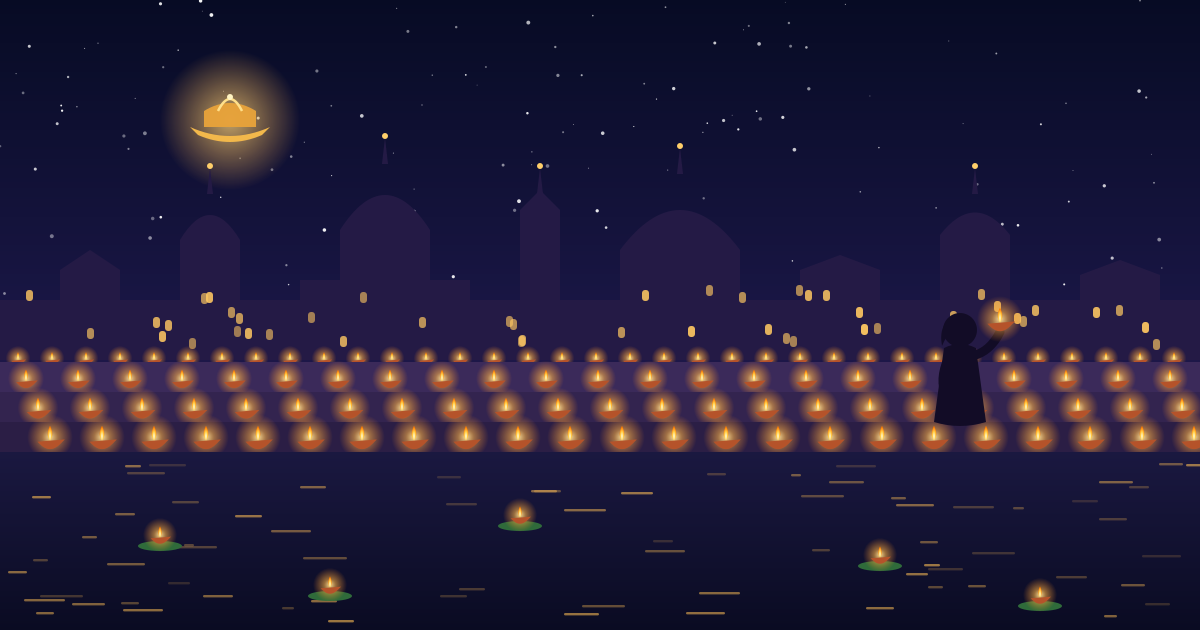
The Diwali story most children hear is the story of Rama’s return to Ayodhya. After fourteen years in the forest and his victory over the demon king Ravana, Prince Rama came home with Sita and his brother Lakshmana. It was the darkest night of the month, so the people of Ayodhya lit rows of little clay lamps to guide them home. That is why the festival is called Deepavali, “a row of lamps”.
In 2026, Diwali falls on Sunday, 8 November, and many South Indian families celebrate Deepavali a day earlier, on 7 November. Below is a gentle retelling you can read aloud in about five or six minutes, written for children aged 4 to 10, followed by the meaning in one line, a toddler version, other Diwali stories families tell, questions to ask and a simple lamp activity.
The Night Ayodhya Lit Its Lamps
Long, long ago, in the shining city of Ayodhya, there lived a king named Dasharatha. He had four sons, and the eldest, Rama, was known across the land for being kind, brave and fair. Everyone was sure that one day Rama would be king.
But many years earlier, King Dasharatha had made a promise to Queen Kaikeyi. Now she asked him to keep it: her son Bharata should be king, and Rama must go and live in the forest for fourteen years.
The king was heartbroken. Rama was not angry. “A promise is a promise, Father,” he said gently. “I will go.”
His wife Sita would not let him go alone. “Where you go, I go,” she said. His younger brother Lakshmana picked up his bow. “And so do I.” The three of them walked out of the city gates while the whole of Ayodhya cried.
When Bharata came home and heard what had happened, he ran all the way to the forest. “Please come back,” he begged. “The throne is yours.” Rama shook his head. He had given his word. So Bharata carried Rama’s wooden sandals back to Ayodhya, placed them on the throne and said, “I will look after the kingdom only until my brother returns.”
In a little house near the city gate lived a potter and his daughter, Tara. Tara was six. She had watched Rama leave, and that night she asked her father, “When will he come back?”
“In fourteen years,” said the potter.
Tara counted on her fingers and ran out of fingers. “That is forever,” she said.
Far away in the forest, the years passed. Rama, Sita and Lakshmana lived simply, among birds and rivers and tall trees. Then one day, Ravana, the proud ten-headed king of Lanka, tricked them and carried Sita away across the sea.
Rama searched and searched. On the way he found true friends: Hanuman, who was strong and brave and could leap further than anyone, and a great army of monkeys and bears. Hanuman jumped all the way across the sea to find Sita and tell her, “Rama is coming.” The army built a bridge of stones across the water, stone by stone. There was a long, hard battle, and in the end Rama defeated Ravana. Pride and cruelty lost. Goodness won, and Sita was free.
By then, the fourteen years were almost over.
In Ayodhya, Tara was not six any more. She was twenty, and she worked at her father’s wheel, making lamps from river clay. Every evening she still looked down the road.
One afternoon a messenger came running. It was Hanuman himself, with news for Bharata: “Rama is coming home. He will be here tonight!”
The news flew through the city faster than any bird. People swept their doorways and drew patterns of coloured powder on the ground. Then someone looked up at the sky and gasped. It was the night of the new moon. There would be no moonlight at all. “How will Rama see his way home in the dark?” they asked.
Tara knew what to do. She and her father carried out basket after basket of clay lamps. People filled them with oil, twisted cotton wicks and lit them. They set the lamps along the walls, on rooftops, in windows and down every step to the river. Tara even set little lamps on leaves and let them float on the water.
Last of all, she took out one tiny, crooked lamp that she had made when she was six, the first lamp she had ever made. She had kept it all these years. She lit it and held it up at the city gate.
Late that night, a golden flying chariot appeared in the sky. Inside were Rama, Sita and Lakshmana. Below them, Ayodhya glowed like a field of stars, row after row of tiny lights shining in the darkest night of the month.
Sita smiled. “They lit the way for us,” she said.
The chariot came down outside the gate. Bharata ran to hug his brother and gave him back his sandals. The people cheered, sang and shared sweets. And as Rama walked through the gate, he stopped beside a young woman holding a small crooked lamp.
“That is a very old lamp,” he said kindly.
“I made it the day you left,” said Tara. “I kept it for the day you came back.”
Rama bowed his head. “Then it is the most important lamp in Ayodhya,” he said. “It waited the longest.”
Ever since then, on the darkest night of autumn, families light rows of lamps to remember that goodness comes home, and that even the longest wait can end in light.
Meaning of the Diwali story
Light wins over darkness, and goodness wins over pride. Rama kept his promise even when it was hard, his friends helped him without being asked, and a whole city worked together so that no one would be lost in the dark. For young children, the simplest version of the meaning is: “When we are kind and keep our promises, we help bring the light back.”
Tara is our storytelling addition, not part of the Ramayana. She gives children someone ordinary to follow through the long wait. The main events, from Kaikeyi’s promise and Bharata’s sandals to Hanuman’s message and the flying chariot, follow the story as it is usually told.
A five-line Diwali story for toddlers
For children under four, or for a quick story before lamps are lit, try this version and point to a real diya as you read:
- Prince Rama had to go far away for a long, long time.
- He was brave and kind, and he beat a very proud king.
- Then he flew home with Sita and his brother Lakshmana.
- It was very dark, so everyone lit little lamps to show the way.
- Rama came home, and that is why we light lamps on Diwali.
Other Diwali stories families tell
Diwali is celebrated across India and the world, and different families connect it with different stories. It helps children to know that there is more than one, so that a friend’s story never sounds “wrong”.
- Krishna and Narakasura. In much of South India, Deepavali morning remembers Krishna, with Satyabhama, defeating the demon Narakasura and freeing the people he had imprisoned. Many families celebrate it with an early oil bath and new clothes.
- Goddess Lakshmi. On the main Diwali evening, many homes welcome Lakshmi, the goddess of good fortune, with clean doorways, rangoli and lamps.
- King Bali. In parts of western and southern India, the day after Diwali, Bali Pratipada, remembers the generous King Bali, the same Mahabali whom Kerala welcomes at Onam. You can read more Kerala tales in our Kerala folk tales in English.
- Jain and Sikh Diwali. Jains mark Diwali as the day Lord Mahavira attained nirvana, and Sikhs celebrate Bandi Chhor Divas, remembering Guru Hargobind’s release from prison in Gwalior Fort.
Encyclopaedia Britannica’s overview of Diwali is a reliable place for older children, or parents, to read more about these traditions.
How to tell this story at home
- Read it in two sittings if needed. Stop after Rama leaves Ayodhya on the first night and finish with the homecoming on Diwali evening. The wait between the two halves makes the ending feel bigger.
- Keep the battle short. The story works without any details of the fighting. Younger children only need to know that pride and cruelty lost.
- Pause after “How will Rama see his way home in the dark?” Ask your child what they would do. Most children suggest lamps or torches before you reach the next paragraph, and they love being right.
- Use a real lamp. Hold an unlit diya, or a battery tea-light for little ones, when you reach Tara’s crooked lamp.
- Tell it without the page. Once your child knows it, retell it from memory with them filling in the parts. Our guide on how to tell stories to kids without a book shows how.
Questions to ask after the story
- Why did Rama agree to go to the forest even though it was not fair?
- What did Bharata do with Rama’s sandals, and what does that tell you about him?
- Who helped Rama when he needed it most?
- Why did the people of Ayodhya light so many lamps that night?
- Why did Rama say Tara’s small, crooked lamp was the most important one?
- Who is someone you would light a lamp for, and why?
For more ideas on turning a story into a conversation rather than a quiz, see our guide to dialogic reading at home.
A Diwali activity: the story-lamp walk
On Diwali evening, before the lamps are lit, set out five diyas in a row. As each lamp is lit, your child tells one part of the story: Rama leaves, Bharata keeps the sandals, Hanuman finds Sita, the stone bridge, and the homecoming. By the fifth lamp, they have told the whole Diwali story themselves.
Safety first: an adult should light and stay beside real oil lamps, keep them away from curtains and loose clothing, and use LED tea-lights for toddlers. Children can still do the telling.
If your child asks for “one more story” afterwards, try a short tale with a clear lesson from our moral stories for children in English, one of the best Panchatantra stories for kids or a gentle choice from our short bedtime stories for toddlers.
Frequently asked questions
What is the main story of Diwali for kids?
The story most families tell is Rama’s return to Ayodhya. After fourteen years in the forest and his victory over Ravana, Rama came home with Sita and Lakshmana, and the people lit rows of clay lamps to welcome them. Diwali means a row of lamps.
When is Diwali in 2026?
Diwali falls on Sunday, 8 November 2026, the evening of Lakshmi Puja. Many South Indian families celebrate Deepavali a day earlier, on Saturday, 7 November, with Naraka Chaturdashi.
Why do we light diyas on Diwali?
In the Ramayana story, the people of Ayodhya lit lamps so the dark new-moon night would become bright for Rama’s homecoming. Today a diya is a reminder that goodness and light return even after the darkest night.
Is the Diwali story suitable for young children?
Yes. This version keeps the battle with Ravana short and gentle and puts the focus on homecoming, kindness and light. For children under five, use the five-line toddler version on this page.
You are welcome to read this BestStories retelling aloud at home, in class or at a library story time. Please link back to this page if you share the text online.