A Not-Too-Scary Halloween Bedtime Story: The Ghost Who Was Afraid of Children
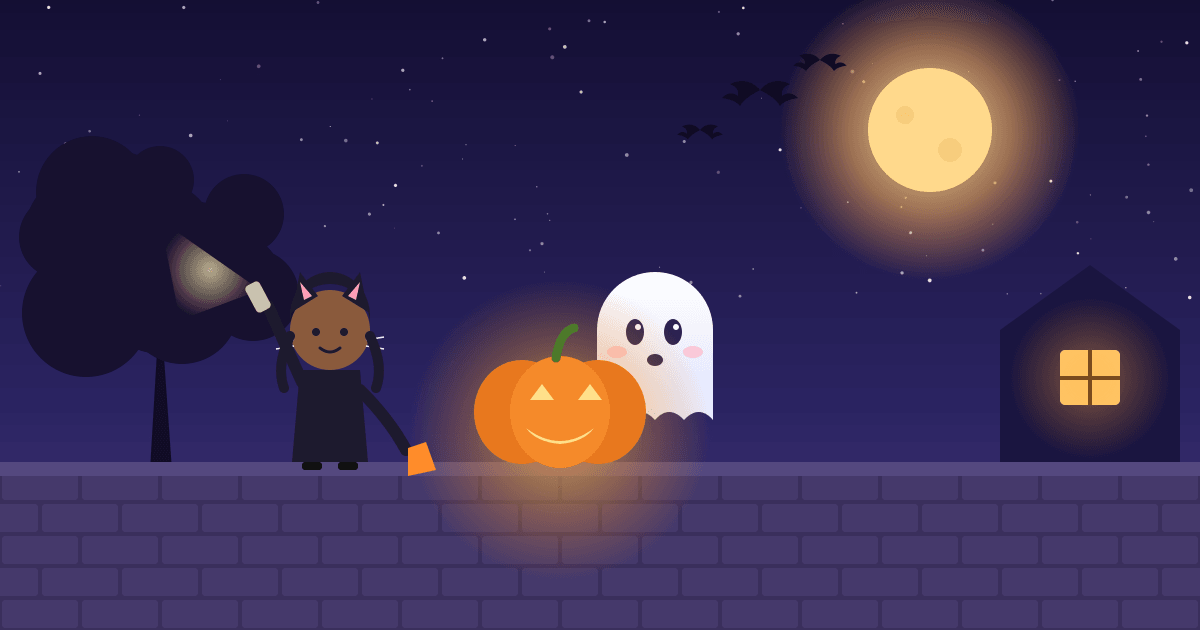
Halloween is a week away, costumes are being tried on, and at bedtime someone small is asking for “a ghost story, but not a scary one.” That is a very reasonable request. A good Halloween bedtime story has a little spooky tension, a funny or kind surprise, and an ending where everyone is safe and sleepy. The easiest way to get there is to turn the fear around, so the ghost is the one who is nervous.
Below is an original story built exactly that way, followed by an age guide, read-aloud tips and simple ideas for the child who still feels jumpy after the lights go out. It takes about three minutes to read aloud.
Why a little bit of spooky can be good for kids
On 23 October 2026, children’s author and professor of children’s literature Liz Rosenberg wrote in The Conversation that Halloween gives children a chance to explore the balance between excitement and fear. She points to Arnold Lobel’s Frog and Toad, who scare themselves silly with a made-up tale and enjoy every shiver of it. Her conclusion is a sensible one for parents: in the right doses, fear can be fun.
She also repeats Maurice Sendak’s blunt advice to a parent whose child screamed at Where the Wild Things Are: read him something else. No single story is right for every child. A story that thrills your six-year-old may be far too much for your three-year-old, and that is normal.
Paediatric sleep teams say the same from the other side. Seattle Children’s notes that nighttime fears are a normal part of development and that younger children cannot always tell what is real from what is imagined. Its advice includes avoiding scary shows and stories that add to a child’s fears, and reading stories about children who are afraid and conquer their fears. A gentle Halloween story where fear turns into friendship fits that advice well.
The Ghost Who Was Afraid of Children
At the very top of an old house, in a dusty corner of the attic, lived a small ghost called Puff.
Puff was round and white and soft, like a cloud that had forgotten to go home. He could float through doors, he could glide along the ceiling, and he could say “Booo” in a voice no louder than a sleepy owl.
But Puff had a secret. He was afraid of children.
“Children are loud,” he told the attic spider. “Children run. Children shout. What if they shout at me?”
The spider, who was very busy with her web, said nothing at all.
One night the moon was big and orange, and the street outside was full of strange noises. Puff peeped through the round attic window. Down below, he saw a witch with a broom. He saw a skeleton with a bag of sweets. He saw a small black cat walking on two legs and holding a torch.
Tip-tap, tip-tap, up the lane,
Who is knocking, who came again?
“Oh no,” whispered Puff. “The children have turned into monsters.” He floated down the stairs as quietly as he could, to check that the front door was shut.
But the front door was open. And standing on the step was the small black cat with the torch.
Puff froze in the air. The cat froze on the step. For one long moment, nobody said a word.
Then the cat lifted her mask. Underneath was a girl with two plaits and a gap in her front teeth. “Hello,” she said. “I’m Meera. Are you a real ghost or a costume?”
“R-real,” said Puff, wobbling. “Are you a real cat?”
Meera laughed. “No, silly. I’m a girl. The witch is my friend Sara, and the skeleton is my little brother Kabir. It’s Halloween. We dress up and knock on doors and say ‘trick or treat’.”
Puff thought about this. “So nobody is really a monster?”
“Nobody,” said Meera. “It’s just pretend. Do you want to see?”
Puff did not want to see. But Meera held out her torch, and the light made a warm yellow circle on the doorstep, and somehow the circle felt safe. Puff floated into it, very slowly.
Tip-tap, tip-tap, up the lane,
Who is knocking, who came again?
Sara the witch waved her broom and said, “Nice costume!” Kabir the skeleton offered Puff a sweet. Puff could not eat sweets, because he was a ghost, but he held it carefully and said thank you, because he was a polite ghost.
They walked to the end of the lane together. When a big shadow stretched across the road, Kabir grabbed Meera’s hand. Puff floated up high to look. “It’s only the neem tree,” he called down. “The moon is making its shadow long.” Kabir let go of Meera’s hand and laughed.
“See?” said Meera. “Everybody is a bit scared of something. Even skeletons.”
When the bags were full and the moon was high, the children went home to bed. Meera waved from her gate. “Goodnight, Puff. Come and say hello next year.”
Puff floated back up to his attic. The spider had finished her web, and it shone in the moonlight like a silver hammock. Puff curled up beside it, round and white and soft.
“Children are loud,” he told the spider sleepily. “But they are also kind.”
Tip-tap, tip-tap, down the lane,
Everyone is home again.
Goodnight.
Which age is it for?
- Ages 3 to 4: read slowly in a soft, warm voice, with the lights on. If your child is sensitive, skip the shadow scene. Let them join in with the “tip-tap” refrain so they feel part of the story rather than an audience for it.
- Ages 5 to 6: read it as written. Pause when Puff and Meera freeze on the doorstep and ask, “What do you think happens next?” Most children guess the friendly ending, and guessing right feels good.
- Ages 7 to 8: ask them to retell it from Meera’s side, or to invent next year’s visit. For a bigger shiver in daylight, our Kerala tale The Ghost of Munroe Island is a spooky backwater story with a twist.
How to read a Halloween story at bedtime
- Keep the scary part early. The tense moment in this story comes in the middle, and the last third is all friendship, a full moon and a cosy attic. Do not add an extra fright at the end, however tempting it is.
- Use your voice to lower the energy. Puff’s “Booo” is no louder than a sleepy owl. Make it soft and silly, not dramatic. Get quieter and slower as the children walk home.
- Name the feeling. After the story, ask, “What was Puff afraid of? What helped him?” This links to the idea in our guide to dialogic reading at home: talking about a story turns listening into thinking.
- Finish with something familiar. A known, gentle favourite after a new story is a good landing. Many children will ask for the same one every night anyway, and there is a good reason for that.
- Make it your own. Swap in your child’s name, your street or your own family’s costumes. If you like telling stories without a book, our guide on how to tell stories to kids without a book shows how to build one around a simple repeating line.
If your child is still scared at night
Even a gentle story can stir up a worry, especially in the week of masks and skeleton decorations. Advice from children’s hospitals is consistent:
- Listen, do not dismiss. Seattle Children’s and Cincinnati Children’s both warn against laughing at a fear, because what looks silly to an adult can feel very real to a child.
- Reassure clearly. Say something simple and repeat it: “You are safe. We are here.”
- Offer comfort, not a show. A comfort toy, a dim night-light or an open door can help. Cincinnati Children’s cautions against elaborate “monster-clearing” rituals, because they can suggest that you believe in the monster too.
- Talk about it in daylight. The next morning, look at the costume, the mask or the decoration together. Things are less frightening when you can touch them in the sun.
If fears go on for weeks, stop your child sleeping or spill into the daytime, it is worth mentioning to your paediatrician.
A note for families in India and abroad
Halloween falls on Saturday 31 October this year. It is a big night in the US and UK and is now celebrated in many Indian cities and schools too, so plenty of children hear about it whether or not their family takes part. A story like Puff’s works either way, because it is really about meeting someone new and finding out they are kind. Diwali follows soon after, on 8 November 2026, and our Diwali story for kids makes a good next read, with its own row of lamps chasing away the dark. For quick everyday choices, see our short bedtime stories for toddlers and our pick of the best Panchatantra stories for kids.
Frequently asked questions
Is it okay to read a Halloween story at bedtime?
Yes, if the story is gentle and ends safely. Pick one where the scary thing turns out to be friendly or funny, read it with the lights on, and follow it with a calm, familiar routine. Save stronger spooky stories for daytime.
What age is this Halloween story for?
The Ghost Who Was Afraid of Children works for ages 3 to 8. For three- and four-year-olds, read it in a soft voice and skip the shadow scene if needed. Older children can read it aloud themselves or retell it from the ghost’s point of view.
What if my child is scared after a Halloween story?
Listen first and do not laugh at the fear. Tell them clearly that they are safe, offer a comfort toy or a night-light, and talk about the story again in daylight. If the fear lasts for weeks or stops them sleeping, mention it to your paediatrician.
Why do some children enjoy being a little scared?
In small doses, a scary moment that ends safely lets children practise feeling brave. Children’s author Liz Rosenberg describes Frog and Toad scaring themselves into a “teeth-chattering but delightful evening”, and many kids love that same safe shiver.
Sources
- Liz Rosenberg, The Conversation (23 October 2026). Boo! Feeling scared on Halloween can be fun for children but can sometimes push their limits.
- Seattle Children’s Hospital. Nighttime Fears (patient and family education).
- Cincinnati Children’s Hospital Medical Center. Bedtime Fears: Helping Overcome Them.
The Ghost Who Was Afraid of Children is an original story written by the BestStories Editorial Desk. You are welcome to read it aloud at home or in class.