
How Panchatantra Stories Help Children: The Five Books Explained
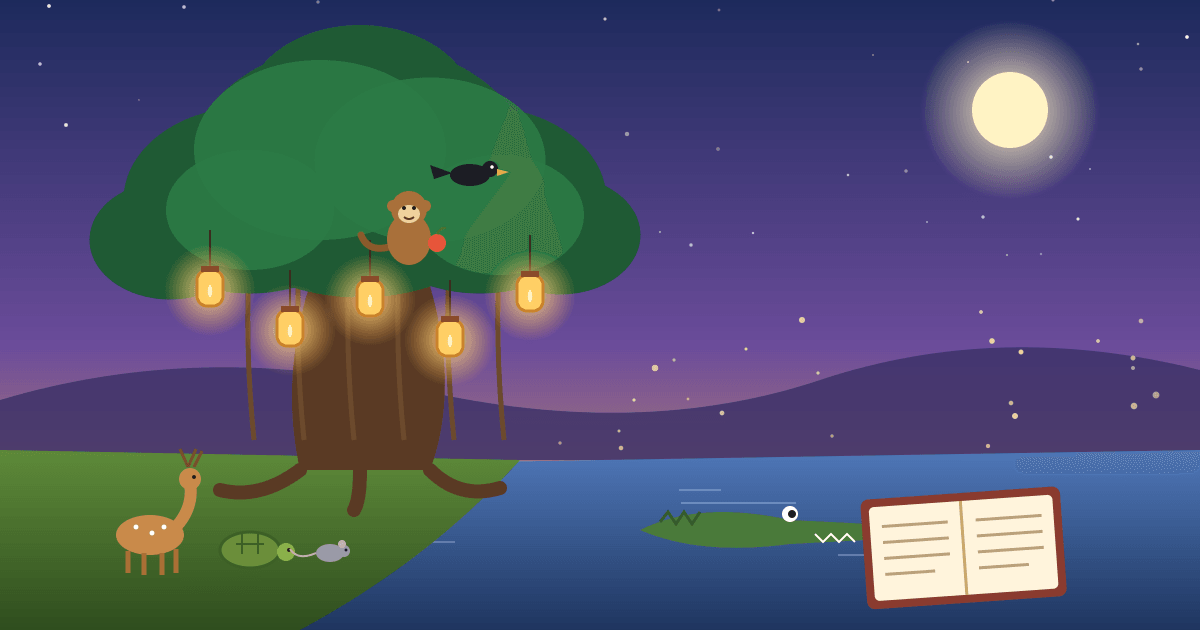
Ask ten parents why they read the Panchatantra to their children and you will hear ten versions of the same answer: the stories are short, the animals are fun and the lesson sticks. Panchatantra stories help children because they pack one clear problem, one clever or foolish choice and one visible consequence into a few minutes, and they do it through animals, so a child can think about honesty, friendship, patience and hasty decisions without feeling lectured. They also give you ready-made questions to ask at bedtime or in class.
There is a catch, though. The Panchatantra is not one tidy book of children's morals. It is a large Sanskrit collection in five parts, written for princes, and some of it is not meant for a six-year-old. Below you will find what each of the five books teaches, which tales are a good fit for ages 4 to 10, what scholars say about the "morals", and five simple ways to use the stories at home. If you want a ready list of tales to start with, see our best Panchatantra stories for kids.
Why the Panchatantra is back in the news
Two items this week brought these old stories into conversation. On 30 October, PTI reported that the Municipal Corporation of Delhi is setting up a five-member expert committee to recommend ways of building values such as honesty, discipline, compassion and social responsibility into primary school activities (The Week / PTI). A few days earlier, on 27 October, former NCERT director Krishna Kumar wrote in The Tribune that the Panchatantra is an "ancient classic of pedagogy" and noted that only a selected few of its tales are considered suitable for children, because most carry a political and administrative message that is hard to interpret (The Tribune).
That second point is the practical one for parents and teachers: the Panchatantra is a good tool for teaching values, but you choose the stories, not the other way round.
What the Panchatantra is, in one minute
The Panchatantra ("five treatises") is an ancient Indian collection of animal fables in Sanskrit prose and verse. The prelude names a learned Brahmin, Vishnusharma, who teaches three unruly princes of King Amarasakti how to live and rule wisely by telling them stories. Most scholars think the name is a literary device rather than a real author. The usual scholarly estimate for the text is around 300 CE, though that is described as an educated guess, and the earliest known translation into a non-Indian language, Middle Persian, dates from about 550 CE. From there the stories travelled into Arabic, Hebrew, Greek, Latin and many other languages, and Wikipedia counts about 200 versions in more than 50 languages (Wikipedia: Panchatantra).
Many of the same tales also appear in the Buddhist Jataka stories, so if your child enjoys one collection, the other is a natural next step. We cover that in our guide to Jataka tales for kids.
What each of the five books teaches
Each book has a main frame story, and smaller stories are told inside it. This is a handy way to see which skills the collection trains.
Book 1, Mitra-bheda: how trust breaks
This is the longest book, about 45 per cent of the whole. A jackal minister, Damanaka, schemes to break up the friendship between a lion king and a close companion. Its many tales show how rumours, flattery and jealousy damage friendships, and why you should check facts before believing what you hear. Good starting stories for children: The Blue Jackal (pretending to be someone you are not), The Wedge-Pulling Monkey (don't meddle in what you don't understand) and The Crows and the Serpent (a clever plan can beat a stronger enemy).
Book 2, Mitra-samprapti: how friends win together
The mirror image of Book 1. A crow, a mouse, a tortoise and a deer, very different animals, become friends and rescue each other. Scholar Patrick Olivelle sums up its lesson as weak animals with different skills working together can achieve what they cannot do alone. This is the best book for lessons on friendship, teamwork and kindness. Try The Mice and the Elephants.
Book 3, Kakolukiyam: wits over force
Crows versus owls, a story about war and peace in which the smaller, wiser side wins by thinking ahead. It teaches strategy and listening to good advice, but it also contains an episode of real violence, so it suits older children more than toddlers. This is exactly the sort of book where the Tribune's "choose carefully" advice applies.
Book 4, Labdhapranasam: what you lose when you are careless
A short book of cautionary tales. The frame story is the friendship of a monkey and a crocodile, who comes every day to eat the monkey's sweet fruit until a betrayal tests it. Book 4 shows what to avoid: do not be fooled by soothing words from someone with cunning plans. Children usually love it. Read our retelling, The Monkey and the Crocodile.
Book 5, Aparikshitakarakam: think before you act
The shortest book (together with Book 4 it makes up only about 7 per cent of the text) and almost all its characters are people, not animals. Its lessons are to get the facts, be patient and not to act in haste and regret it later. The best-known tale is about a woman who leaves her baby with a friendly mongoose, sees blood on its mouth when she returns and kills it, believing it has hurt her baby, only to find that the mongoose had saved the child from a snake. It is a strong story for talking about jumping to conclusions, but it is sad, so decide whether your child is ready for it.
The skills children actually pick up
- Listening and vocabulary. A short plot with repeated patterns is easy to follow and retell, which is why storytelling is so useful for early language. Our guide to dialogic reading at home explains how to turn a story into a conversation.
- Cause and effect. Every tale shows a choice and its result. Children learn to predict what will happen next.
- Empathy and perspective. Asking "how did the crocodile feel?" or "why did the monkey trust him?" trains children to think about other minds.
- Self-control and patience. The hasty characters in Books 4 and 5 are useful mirrors for children who rush.
- Critical thinking. Many tales warn against flattery and smooth talk, a useful habit for a child who will one day use the internet.
What scholars say: the morals are not always simple
It would be unfair to oversell the Panchatantra as a gentle moral primer. Some early Western scholars, such as Edgerton, argued that its morals "glorify shrewdness and practical wisdom" rather than virtue, while other scholars see the tales as teaching dharma and ethical conduct. Olivelle describes the debate itself as proof of the text's "rich ambiguity" (Wikipedia). For a parent, the practical lesson is simple: do not treat each story as a rulebook. Let the child decide whether the clever animal was kind, and talk about it.
Five easy ways to use Panchatantra stories at home or in class
- Pick one story, not a book. Start with a single five-minute tale from Book 1, 2 or 4. Save Book 3 and the sadder Book 5 stories for older children.
- Read it aloud and stop before the end. Ask "What should the monkey do now?" and let the child answer before you read on.
- Ask open questions. "Was he a good friend? Why?" works better than "What is the moral?". Our moral stories for children guide has more questions.
- Retell it without the book. Let your child be the monkey, the crocodile or the narrator. Tips in how to tell stories to kids without a book.
- Link it to real life, lightly. The next time a friend says something unkind, ask, "Does this remind you of a story?" Do not turn every squabble into a lesson.
Frequently asked questions
How are Panchatantra stories useful for children?
They give children short, memorable stories about friendship, honesty, patience, teamwork and thinking before acting, told through animals so the lesson feels safe and playful. Because each story has a clear problem and a clear turning point, they are also easy to discuss, retell and act out, which builds listening, vocabulary and reasoning.
What are the five books of the Panchatantra?
The five parts are Mitra-bheda (the loss of friends), Mitra-samprapti (the winning of friends), Kakolukiyam (crows and owls, about war and peace), Labdhapranasam (loss of gains) and Aparikshitakarakam (ill-considered action). Each has a main frame story with other tales told inside it.
What age is right for Panchatantra stories?
Most children enjoy the shorter animal tales from about age 4, such as The Monkey and the Crocodile or The Blue Jackal. The full text contains political advice and some violent episodes, so pick single stories for young children and save the harder ones for older ones, around 10 and up.
Do Panchatantra stories always teach a simple moral?
Not always. Scholars disagree about whether the book mainly praises cleverness or ethical conduct, and many tales end with a practical lesson about prudence rather than a gentle virtue. That is why it helps to talk about each story with your child rather than just announcing the moral.
Sources
- Wikipedia. Panchatantra (five books and their share of the text, authorship, dating, translations, scholarly debate, quotes from Olivelle and Edgerton).
- The Week / PTI, 30 October 2026. MCD schools to introduce activities to teach children moral values.
- The Tribune, 27 October 2026. Krishna Kumar, Learning from the Panchatantra.
- Wikipedia. Jataka tales (shared stories with the Panchatantra).
Written by the BestStories Editorial Desk. The story links above go to our own original retellings, which you are welcome to read aloud at home or in class.